

I am pretty biased on the topic of breakfast. It could be my favorite meal of the day. I want to name that upfront, so you can keep reading with your own free will. But I didn’t always feel this way. In fact, I went years (leading into and during an eating disorder) pushing it off — later and later, and then even later — in the day.
My current pro-breakfast bias has developed out of both personal experience and clinical work.
On the personal side: I believe in my heart of hearts that eating breakfast every day was one of the top five things that helped me heal my relationship with food. It re-established trust, respect, and self-compassion with my body. It set the tone for how I was going to care for myself that day. And physiologically, it helped with my blood sugar, digestion, chronic injuries, mood, concentration, energy, sleep quality, and so much more.
On the clinical side: I’ve worked with hundreds of people over the years, and one of the most consistent things I’ve witnessed is what happens when someone starts eating breakfast regularly — often before they feel ready, before the hunger is there, and before it feels natural. They start to feel more at ease around food later in the day. Choices feel less fraught and less loaded. Over time, they actually report feeling more in tune with their bodies, not less. I don’t believe that’s a coincidence.
If you’re reading this and thinking, Well, I’m just not that hungry when I wake up, and the idea of eating first thing sounds terrible — I hear you. I spent a decade feeling this way. I’m not here to say there are no outliers, but I want to invite you to stick with me for a minute.
Because eating breakfast before you feel hungry can be a radical act of self-respect, self-kindness, and true self-care.
Choosing not to eat first thing in the morning isn’t always the “intuitive” choice, even when it feels like you’re listening to your body. A lack of morning hunger can be the result of chronic under-eating, caffeine as a substitute for food, high stress, neurodivergence, illness, or medications. It can also come from years of conditioning yourself to suppress or ignore morning hunger — to get out the door, get the kids ready, or tend to anything on your to-do list that felt more pressing than food.
But there’s another layer worth naming: cultural anti-fat bias.
The messaging that eating less is inherently better does not land equally on all bodies. People in larger bodies are bombarded, constantly and from every direction, with the message that they should be eating less, moving more, and taking up less space. Skipping breakfast often isn’t a neutral personal preference. For a lot of people, it’s an internalized response to years of being told — explicitly or implicitly — that hunger itself is a problem to be managed rather than a signal to be honored. “I’m just not a breakfast person“ is a story many of us have repeated so many times that we stopped questioning where it came from.
If we don’t feel hungry in the morning, it’s usually not because our bodies have defied the laws of biology and no longer require food.
It’s typically because our systems have adapted to survive on as little fuel as possible. And because somewhere between being born into this world and becoming a person swimming in diet culture, most of us were taught that skipping breakfast was — at minimum — something we might as well do, or — at most — a sign of “discipline” and virtue. Intermittent fasting didn't create this idea, it just repackaged it in the language of wellness and longevity, making it feel scientific and aspirational rather than what it often is: restriction with better PR. And it spread fastest among people who had already been conditioned to see their appetite as something to outsmart.
Most people would never question whether their dog or their child deserved breakfast. They just feed them because it makes sense — it feels responsible, important, and kind. The mental gymnastics (I don’t have time, it doesn’t sound good, I’m not hungry, my stomach feels off in the mornings, I eat enough later in the day) only seem to start when the body in question is our own.
And those justifications are not random.
They are louder for people who have been told their bodies are too much. They are louder for people who grew up watching the adults around them diet. They are louder for someone who has learned to like the feeling of emptiness. They are louder for anyone who has ever been praised for eating less and felt, however briefly, that the praise meant they were finally doing something right. This is where the distinction between intuition and conditioning becomes essential.
When we don’t examine where our beliefs about breakfast come from, the alternative often becomes: caffeinate, hydrate, wait to see if we get “hungry enough” to have something, or just push through until lunch. Then wind up lightheaded, anxious, irritable, unable to concentrate, nauseous — and craving everything later in the day, only to blame ourselves for that chaotic feeling. And then the shame spiral begins.
If this has been part of your story, there are a few things worth holding onto.
Consistent meals — yes, even before you feel hunger — are part of reconnecting with your body.
Eating early in the day actually helps restore hunger and fullness cues over time.
Breakfast is not “overeating,” it’s nourishing a body that deserves to be supported.
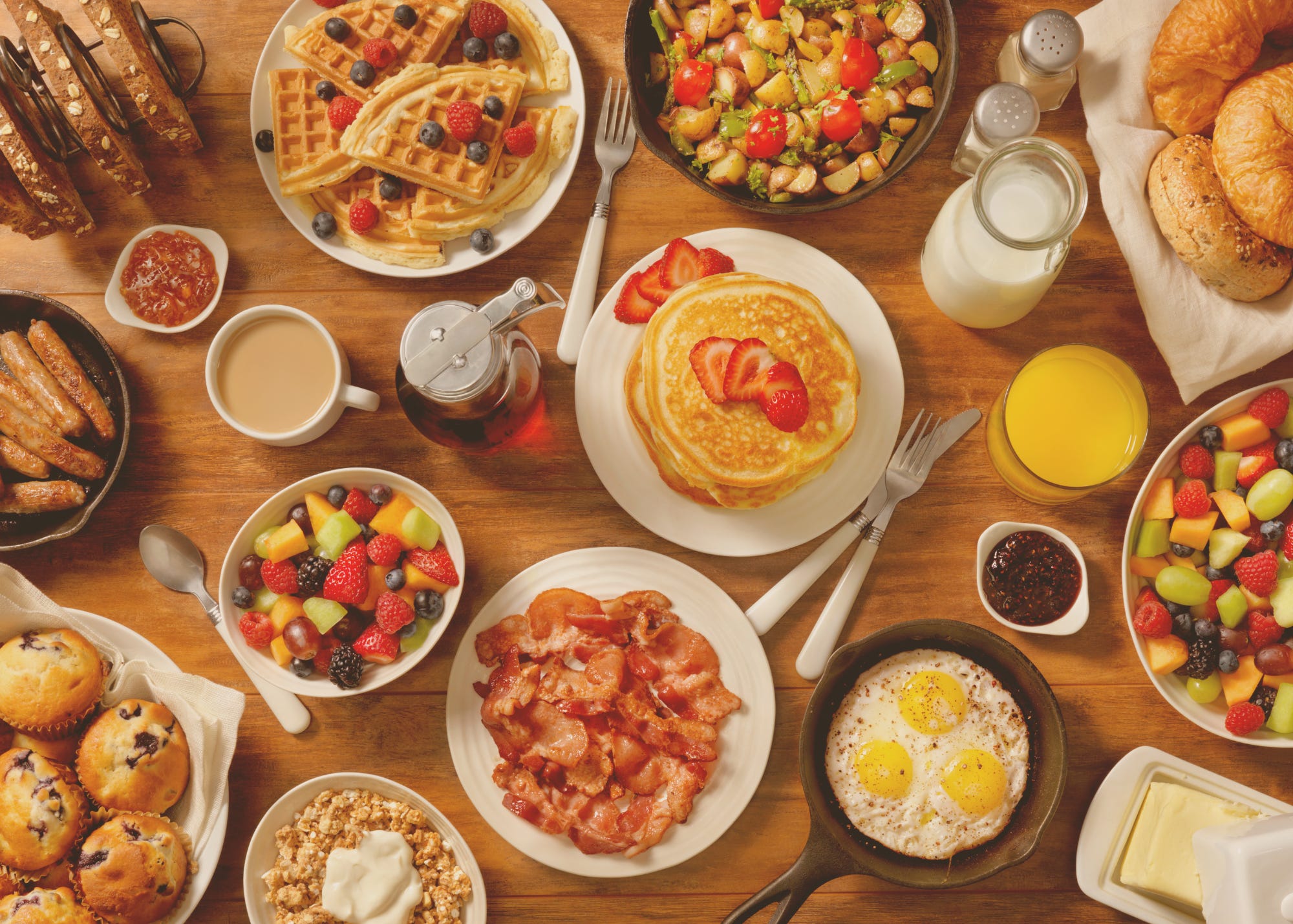
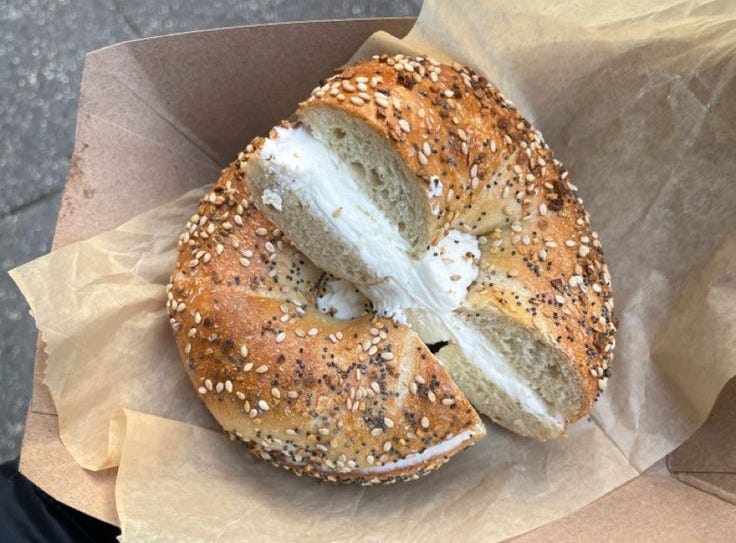
Any food can be a “breakfast food” — you’re allowed to choose whatever works for you.
Having that bleh feeling in your stomach in the mornings is a common reaction to going too long without food, and is only made worse by pushing it off further.
And you never need to earn your meal, qualify it with a stomach growl, or wait until you’re desperate for it.
Eating is about care. It’s about saying: my body deserves nourishment — without punishment, without waiting, without justification.
So if you ate something this morning even though you weren’t sure you were “hungry enough,” I see you. I’m doing it with you. That is what it looks like to rebuild trust. That is what it looks like to choose yourself.
Breakfast is not “indulgent,” it’s deeply intelligent.
Feed your body. Before the world asks you to show up for anything else, show up for you.

If you're in the process of reclaiming breakfast — or if you already have — I'd love to know:
What's one thing that made its way into your mornings? No rules, no "healthy" required. Just what felt good.
And if you’re having a tough time with it, drop a question. I’m planning a part two on this topic!
Having kids changed a lot about the way I care for myself. I was always an I-love-breakfast person, but when I had two kids under 5 and was constantly, constantly feeding them, I realized how much the basics matter. Whenever my kids got dysregulated, I would run through a mental checklist: when's the last time they ate? What did they eat? How much sleep have they gotten in the past 24 hours? Do they need some outside time? Etc. And often a quick snack or some quiet time would be all they needed. So now I do the same mental checklist for myself.
I eat breakfast around 6:30/7:00am but I also found that having a snack at 10:30 works well for me. I used to tell myself, "I've already had breakfast and lunch is in a couple hours, I don't need a snack right now!" But I do.
Thank you for writing this. I am a diabetes educator and so many of my patients say they don't eat breakfast. I used to be that way until I took a hard look at my habits and decided to try something different. Now it's part of a daily ritual that you so eloquently described has so much to do with showing care and respect for oneself. I wish I could share this article with them.