

If you’ve ever spent time in the hospital as a patient—or the loved one of a patient—you probably know firsthand how complicated our appetite can become when we’re sick, recovering from surgery, or enduring a variety of treatments. Sometimes it fades gradually, other times it comes and goes in waves, and often it disappears altogether like a light switch without a dimmer. And what comes back first (before real hunger, before your body can tolerate much of anything) is the desire for something small and simple. Basically: something that won't fight you.
For me, it was Jell-O. And it’s still Jell-O.
I've spent time in hospitals. More than once, for different reasons. I remember the particular quality of that fluorescent light, the sounds from neighbors in the beds on my hall, the IV tubing, the disrupted sleep when it’s time for medication, the way time moves differently when you can't leave. And, I remember the sweet and fruity taste of those brightly colored jiggly cups.
I don’t remember this because it was some glorious culinary experience. I remember it because it was something. It was cold and it was yummy (in my personal opinion) and it slid down without requiring effort. It made the impossible feel possible. It was, in those moments, a small mercy for my body and brain.
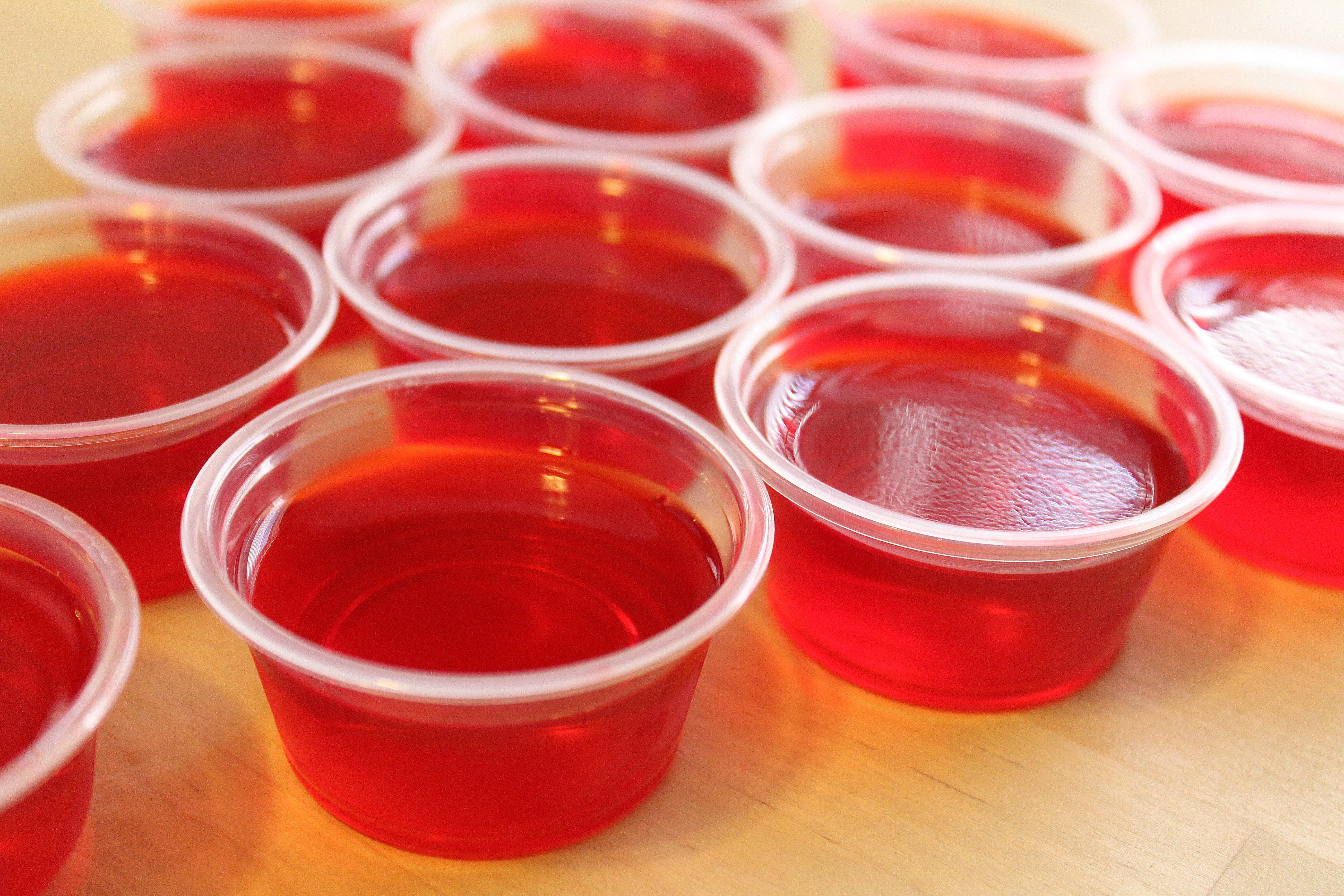
Of course, RFK Jr. would like to take that mercy away in the name of “wellness.”
Last month, the Department of Health and Human Services sent a memo to hospitals urging them to align with new dietary guidelines that emphasize limiting sugary, ultra-processed foods—threatening their Medicare and Medicaid reimbursements if they didn’t comply. Kennedy stood at a press conference and said, “We shouldn’t be giving people who are sick Jell-O and Cheerios and rubber chicken and sugar drinks.” His advisor Calley Means went further, encouraging the public to report hospitals serving “sugary drinks” through an HHS complaint portal (essentially asking people to surveil sick patients and the nurses caring for them).
This is a messy web of diet culture, nutrition disinformation, and distraction from what truly impacts health outcomes.
Jell-O has been in hospitals for over a hundred years. And despite what MAHA influencers might argue, it’s not because doctors and dietitians were asleep at the wheel. It’s because it works. It’s easy to keep down after surgery, it’s used to prep for colonoscopies, and it’s what many people can tolerate with a GI virus. It’s what you offer someone who hasn’t eaten in days when anything more substantial would be too much.
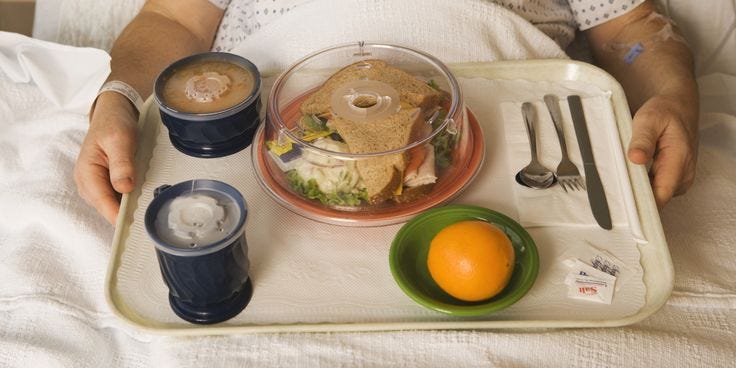
I don’t think most of us would suggest that hospital food is the most delicious thing we’ve ever tasted. But that's not the point—and it's not the same thing as demonizing the specific foods that keep sick people going, then threatening hospital funding for providing them. Because this mandate goes beyond Jell-O: it targets nutrition shakes, meal supplements, and the quick carbohydrates that are sometimes the only thing a body can use. Dietitian Shana Minei Spence put it well in her own newsletter last week: things like Ensure drinks aren’t really much of a “treat” in the diet culture sense of the word. They’re often how someone gets in any calories at all.
Doctors and medical providers have pushed back on RFK’s memo, saying the mandate fails to account for patients’ unique dietary needs. And of course it does. A blanket nutritional ideology doesn’t know every patient, and it’s certainly not going to make a dent in population level health.
What we’re watching is a man who has never practiced or received training in medicine impose a moralized food philosophy on the most vulnerable people in the country at their most vulnerable moments. I repeat: this is not health policy. And it’s also part of a larger pattern.
What RFK Jr. has actually done to American public health:
He rewrote the Dietary Guidelines with industry fingerprints all over them. Over 200 health experts signed an open letter warning that the 2025-2030 guidelines were shaped by authors with documented ties to the meat, dairy, and supplement industries. The guidelines now simultaneously tell Americans to limit saturated fat and eat more red meat and full-fat dairy (a direct contradiction that scientists called dangerous). He also declared an end to "the war on protein." Does anyone really think protein is lacking in the PR department?
He championed deregulating raw milk, which is a documented food-borne illness risk responsible for thousands of illnesses and hundreds of hospitalizations over the past two decades. But reframed it as "health freedom."
He supported reductions in SNAP benefits while using SNAP restrictions to police what food insecure people eat. This means restricting what people can buy and cutting the money they have to buy it. And none of that is “healthy.” I’d argue it’s actually quite violent.
He pushed to remove fluoride from drinking water, a public health measure the CDC has called one of the greatest achievements of the 20th century, and one that disproportionately protects children with no other access to dental care.
He published a flagship children's health report (the MAHA report) that multiple analyses found misrepresents research and cites nonexistent studies, some deemed AI-generated. This is the document reshaping federal children's health policy.
And on vaccines: he gutted the CDC's independent vaccine advisory committee, replacing career scientists with known skeptics. He canceled mRNA research including work on an H5N1 vaccine. He dropped COVID recommendations for pregnant women and healthy children without going through official channels. He spread misinformation about measles treatment, promoting vitamin A as a cure while a preventable outbreak killed children.
Jessica Knurick, PhD, RDN has been a really helpful resource for tracking the developments (or lack-there-of) in health policy. So a big thank you to her and her Substack for continuing to keep me informed.
The through line here is that this is about control and about causing harm to specific populations. It’s also built on the same logic that has always animated diet culture and wellness moralism: the idea that suffering is a result of personal failure, that sick people made themselves sick through bad choices, and that the solution is discipline and surveillance. It scapegoats the body and punishes the sick. And it distracts (loudly and incessantly) from the systems actually making people unwell.
I think about the people in hospitals right now. People in pain. People who can’t eat. People whose nurses are trying to figure out what they can get them to take in…any calories, literally anything. And I think about what it would mean for those nurses to live in fear that a bag of Jell-O makes their hospital non-compliant with a federal mandate.
So I’d argue that this is not making America healthy. If anything, it’s making sick people feel like they’re doing it wrong when they’re actually doing their best.
There is no neutral version of this. Attaching moral judgment to what patients eat—threatening hospital funding based on the presence of Cheerios on a tray—is diet culture policy. And it is being carried out by a man who has spent years systematically dismantling the public health infrastructure that keeps people alive.
He can pry my beloved Jell-O from my cold dead hands.
Many of the hospital foods I ate regularly, to this day, aren’t appealing to me. In fact, several of them seem to just be tangled up in horrible memories. But good old Jell-O…there is just something about it for me. It’s still a favorite and I make it regularly. Topped with plenty of whipped cream, of course.
Anyway, thanks for being here. I’m hoping this finds you able to eat the things you love; but if not, I’m hoping you know that choosing to eat whatever foods you can get down—Jell-O or otherwise—is a radical act of self-kindness. And true health.

Have you spent time in hospitals, eating hospital foods? Do you have memories associated with any of them in particular?
And if not, what are the simple foods you rely on when you aren’t feeling well?
Catch up on the latest episodes of the podcast.
Dating in Recovery: On Vulnerability, Diet Culture in Relationships, and Finding Someone Who Can Handle the Hard Stuff (Bonus Episode)

This bonus episode started with a question from a paid subscriber (thank you!) and turned into something bigger.
“It Works Until It Doesn’t”: Under-Eating, Shrinking to Belong, and the Long Game of Taking Care of Your Body with Leslie Schilling, RD (Part Two)

This is Part 2 of my conversation with Leslie Schilling, RDN. And if you've been navigating the noise around weight loss, nutrition, exercise—while wondering what it actually means to take care of your body right now—I think you're going to find so much support in this episode.
"GLP-1 Marketing is Scorched Earth": On Culture, Ethics, and Starvation States with Virgie Tovar

There’s a lot of noise right now around GLP-1 medications—conflicting advice, emotional stories, and a cultural shift that feels hard to name.
As far as the SNAP restrictions go...a loved one reminded me last night that during a time of scarcity, we tried eliminting desserts. It backfires and you end up blowing your careful budget because you're already (probably) feeling deprived and constrained...then you go and remove the part that feels "frivolous" or normal, and the deprivation takes over. Even without considering safe foods, family celebrations/holidays, or the way it's dehumanizing to remove choice from people just because of poverty...people on SNAP NEED to be able to have treats IN ORDER to stay on budget. My loved one would argue that's exactly when you need it the most.
Having been in the hospital for several surgeries to treat colorectal cancer, the most important thing from me about Jell-O is that it keeps. If you get to your hospital room from post-op late, you’ve already missed the hospital nutritionist coming by for dinner orders. Jell-O in a package means the nurses can give it to you when that hunger signal turns back on, even if that’s at 11 o’clock at night.