


This is actually the first interview I’ve recorded since my SCAD heart attack. It’s been a rocky few months, and I’m still finding my footing each day, but it feels really good to be back having these conversations with people I care about and admire. And I couldn’t have asked for two lovelier guests to welcome me back.
Today I’m joined by two returning guests, Vanessa Scaringi, PhD and Kathryn Garland, LCSW, CEDS, who are speak with me about their new book, Hungry for Connection: Heal Your Relationships with Food and People in an Insecurely Attached World.
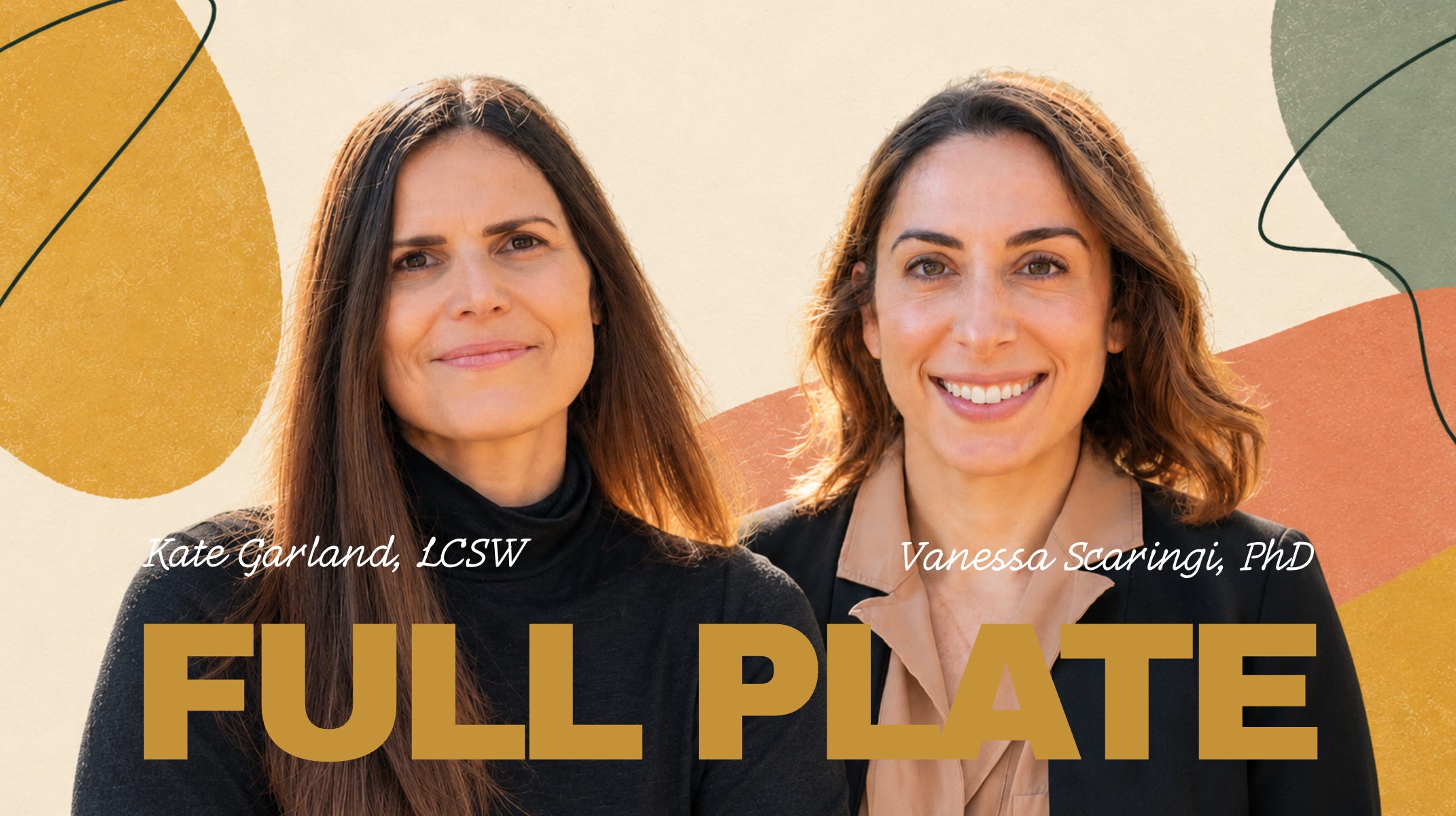
If you listened to our first conversation, you’ll remember that we explored attachment theory and how the ways we learn to seek safety and connection in relationships can show up in our relationships with food and our bodies.
Today we go deeper into how diet culture shapes our sense of safety, the pressure to fit in, and the loneliness and disconnection so many people are experiencing.
And I think this is an especially important conversation right now, as we’re living through a relentless resurgence of weight-loss messaging.
I’m hearing from so many people that they have worked incredibly hard to make peace with food and their bodies, only to find themselves questioning everything again.
We talk about why that happens, how diet culture can exploit our need for belonging, and what it means to build genuine connection in a world that so often makes us doubt ourselves.
Part One: Free for everyone
In the first part of our conversation, we explore:
How attachment theory helps us understand our relationships with food and other people
Why fitting in and genuinely belonging are two very different things
The connection between loneliness, disordered eating, and our need for safety
How our relationships can influence our ability to trust ourselves
Why so much of diet culture recovery involves more than talking about food or bodies
Part Two: For paid subscribers
Upgrade right here to get access to part two.
In the second half, we get into:
How the GLP-1 era and increased weight-loss pressure are impacting people trying to make peace with food and their bodies
Why diet culture is so good at selling us belonging and acceptance
The exhausting pressure to optimize ourselves and how that disrupts our connection with self and others
*How to learn to trust yourself again, and why it doesn’t mean always making the “right” decision
How we can loosen our dependence on external rules and reassurance
Why disordered eating isn’t an individual failure, and who gets let off the hook when we treat it like one.
I would love to hear your thoughts (and personal experience) on connection, belonging, and its relationship to diet culture.


