

I wrote a version of this a few years ago, and it feels more important than ever to revisit.
This one is free for everyone.
If you’ve found comfort, insight, or support in my writing / podcasting, upgrading to paid is the absolute best way to help me continue this work. Thank you so much for being here.
I’ve been thinking lately about all the things we ask our bodies to do that they were never meant to do. (Well, honestly, I don’t exactly stop thinking about this, given my work).
Shrink until they fit the ever-changing ideal. Or, if we’re genetically smaller bodied, do everything possible to stay the same size forever. Never fluctuate, never expand, never soften, never wrinkle, never lose abilities, never age. At least not visibly.
We’re told to treat the human body like a stubborn appliance with a malfunctioning weight setting, as if stability in size is a virtue and any evolution is a failure. Especially if we evolve in the “wrong” direction.
But maybe bodies aren’t meant to do this?
By ‘this’ I mean, stay the same. The idea that bodies are supposed to be thin and smooth and remain fixed in some twisted time warp…that is the problem, not the body itself.
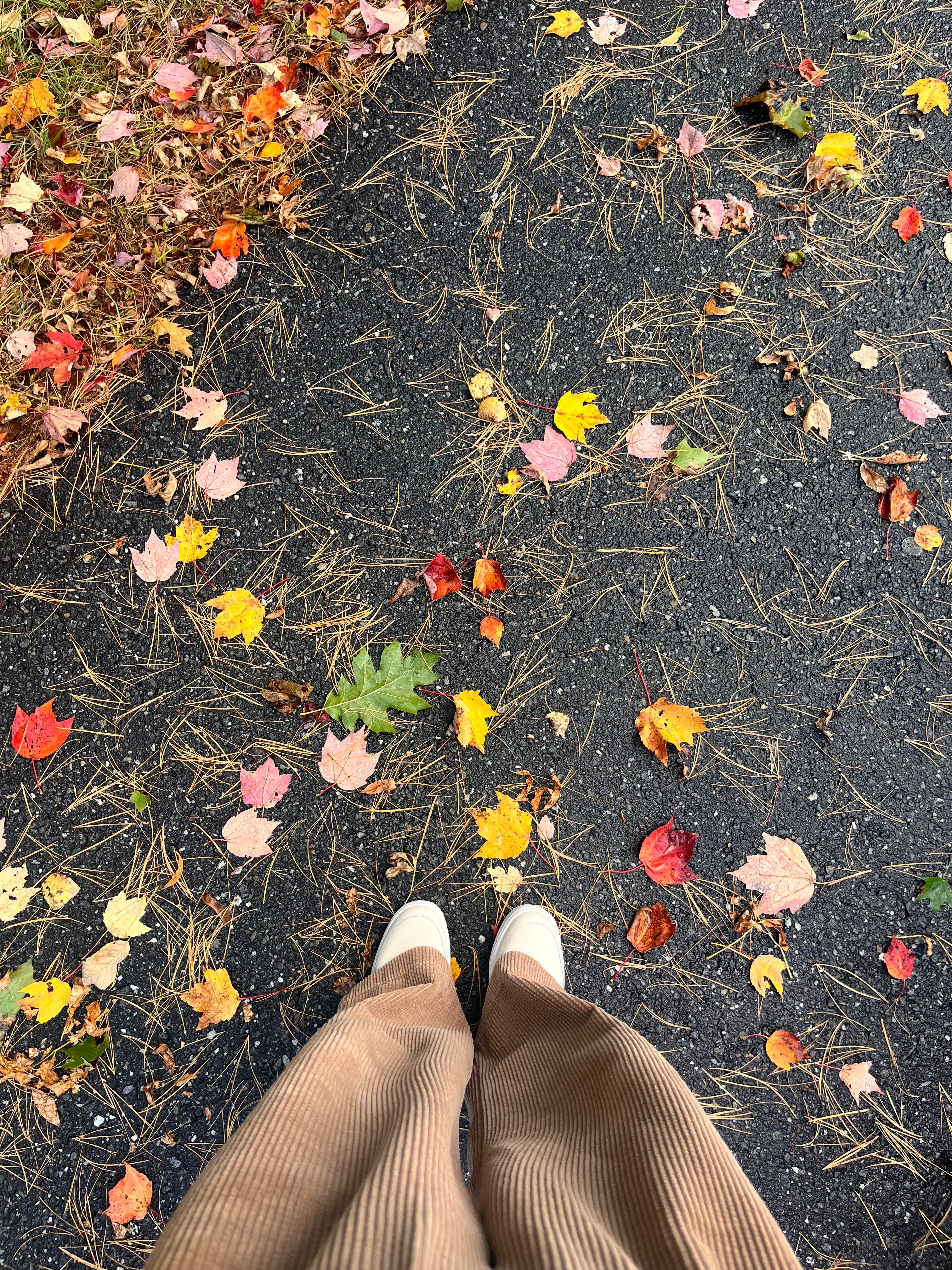
After all, we don’t expect this from dogs or flowers or weather or anything else nature offers. And yet, we forget that we are nature, too: meant to bend, to pause, to change, to grow, to break and break and break…and begin again. We are not mechanical beings or machines with a dial to set right. We are the tree. We are the field going gold, and then to seed. We were always meant to change.
Having a body in this world is hard, especially right now. So today, I’m returning to some reminders I’ve written about in the past.
Gentle truths to return to, whenever you need to read them again:
A smaller body does not mean a healthier body. Despite what decades of medical bias and weight-loss marketing have told us, thinness is not a reliable proxy for health. You cannot see health on a person.
We’ve been sold a pretty dangerous narrative: a smaller body is seen as more disciplined, more worthy, more well. And despite how hard it can be to cut through the noise, the Health at Every Size framework (and over a century of research) reminds us: health cannot be reduced to our size, and when it is, that stigma itself (and the way it impacts the medical care we receive) is what truly harms our well-being.Thinness is not a moral virtue or a victory. Really, you are not a better person because your body fits into a smaller pair of jeans. Thinness is not a prize and fatness is not a failure, because bodies are not moral hierarchies. They are homes. And every body (no matter its shape or size) is equally worthy of care, dignity, and respect.
Gaining weight does not mean you’re doing something wrong. If you’ve ever noticed your body got bigger, suddenly noticed an automatic jolt of shame or fear reverberate through you, then you’ve felt it: the programming that says “oh my god what have you done, you need to fix this.” Fix this?? As if it’s broken, damaged, defective.
But gaining weight can mean many things. It can mean you’re healing, and finally feeding yourself with kindness. It can mean you’re coming home to yourself after being at war with your body for decades. And it can mean the obvious: that you’re a human being with a human body, one that goes through changes and seasons, all in the interest of keeping you here.Weight fluctuations are normal and expected, because bodies aren’t robots. Hormones and stress and grief and joy and puberty and menopause and illness and rest and recovery and life. Bodies respond to all of these things and more. That’s what they’re supposed to do, and there doesn’t always need to be a reason or a justification for how they react.
Body diversity is real, beautiful, and intentional. I was on a walk with Jeb and the dogs last weekend. We’re in Maine where autumn is making itself known (my favorite season!) and we passed by a bright red tree in the midst of a grove of green-ish trees. I looked at it and marveled at its difference — the way it glowed and stood firm between the others — and thought: we don’t question that, we photograph it, and call it beautiful.
Bodies are meant to change. This is actually the only guarantee, isn’t it? There is never ever going to be a “final draft,” because physiology demands that our bodies stay in flux. Which means that, for as long as we’re living, our body will be changing. I have to say: there is so much grief in that. So much loss and uncertainty and frustration as we age, get a new medical diagnosis, or navigate the everyday shifts. But there is also so much privilege and joy…what a gift it is to be able to witness and experience those changes instead of the alternative. (I have to remind myself of this every day, especially on those days where I just want my body to get its shit together.)
There is, under no circumstance, a wrong way to have a body. To be VERY clear, there are bodies our culture rewards and bodies it punishes. That hierarchy is real in a sense, but fabricated and constructed with a sinister purpose; it’s not proof that some bodies are actually better than others. The most radical thing we can reject (for ourselves and everyone around us) is the premise that there was ever a correct body to begin with. There are simply human bodies. Changing, complicated, ordinary, worthy human bodies.


If your body feels different from how it used to feel, I see you.
I am living that, too. And I’m sure every other person reading these words is in agreement.
One of the cruelest things we’ve learned from diet culture is that body changes mean we’ve stopped “trying hard enough” or done something wrong. Instead of being curious and compassionate about what our bodies are moving through, we’ve learned to monitor them constantly and blame ourselves for whatever we find.
This definitely isn’t about ignoring our experience, pretending that health concerns never happen, or that symptoms should be brushed aside.
Listening to your body is powerful and seeking support when something feels off is wise. (More on that here)

The problem is, our culture has confused awareness with alarmism — to the point where the body has become a constant (unpaid internship?!) project, and every fluctuation in shape or size is seen as dangerous pathology. All of that has made it very difficult to make room for the vast, wild spectrum of “normal” that diet culture has taught us to fear.
But the only “normal” thing about bodies is that they change, and there is no single version of “healthy” or “right” that everyone must or should fit into.
I know it’s hard out there right now. So I suppose I’ll end this by saying: Save this post if you need something to return to on hard days. Share it with someone else who might need the same. And thank you so much for being here.
I’d love to hear from you.
What do you notice coming up for you when your body changes?
Have you thought about what the fear (or other emotion) is about?
What has helped you move through that fear with more kindness?
My mother died a year ago after a year and a half battle with cancer. In the end her body had shrunk to almost nothing. After she died, I went through a period when I couldn’t find myself, and I couldn’t feel joy in the things I used to love doing. I have spent the last year trying to find my hope and joy again, and I was starting to feel like I had gotten there. I am also a 45 year old woman who has fought her weight her whole life, and this past year I gained weight. Of course so much of my body image is connected to my mom, so that has all been a part of grieving her too. In this healing time, I had made a conscious decision to accept and love my changing body. The other day, though at my regular physical, after telling me that my labs and blood pressure were perfect my doctor said she needed to talk mo me about my gaining weight. She went on to ask if I eat rice and potatoes and said that I needed to start counting calories and carbs. I was totally crushed by this experience. She knew about my mom’s death, and my struggles with depression. I feel so unsafe with her now, and so confused about how to find a doctor that will be supportive. I thought she was that doctor. I have been totally spiraling since that. Your podcasts and writing has been helping me a lot.
I love this. It's obvious when we look at our baby pictures that our body has changed drastically, but it's hard for us to grasp that those changes never stop. We won't look the same today as we will in 40 years; that's part of being mortal.