

Quick note: If you are looking for an essay specifically on sugar and the impact of restricting it, this is a deeper dive. It is, to date, the piece with the most subscription upgrades, so it was clearly a needed topic!

Now, on to today’s Halloween candy musings…
Every October, the internet fills up with advice about the right way to manage Halloween candy. How much to allow, when to allow it, how to prevent sugar crashes, how to avoid creating an obsession, whether to trade it for toys. This essentially devolves into who has the “correct” approach to parenting, eating intuitively, and mastering the art of “balance.”
And every October, I sit back and think about how diet culture has caused us to collectively lose our minds over sugar — as if a pillowcase full of Snickers is a serious threat to public health (instead of, you know, school shootings, abortion bans, millions without reliable access to food and healthcare, and the current administration’s approach to disease prevention).
We have a hard time allowing food to exist simply because it's pleasurable.
This, for me, is one of the most exhausting things about diet culture. Because pleasure and joy are so essential not just for our wellbeing, but for our ability to stay human (and show up for what matters).
Yet we’re conditioned to believe that eating something delicious needs to be balanced out by doing something “virtuous” afterward. So even when Halloween candy is “allowed,” it’s allowed for a couple of days before someone suggests that we all need to focus on protein-packed meals, make some healthier choices, and get back on track.
But what is this track we speak of? And who decided it’s what we should be controlling for?
I think the track, whether we realize it or not, is often about being good. Being a person who doesn’t get too carried away by enjoying some candy. Who knows when to stop, and who can always be trusted to make the “right” choice.
This brings me back to my conversation with Savala Nolan and her writing on how aspiring to goodness, particularly for women, is ultimately about obedience and restraint. About, as she puts it, staying legible to a mysogynistic culture. Food is one of the earliest places we learn to practice that.
We get praised for resisting joy, making the “right” choices, and knowing precisely when we’ve had enough. We learn to see our appetite and our desire as things to manage, and that denying ourselves pleasure is a sign of intelligence and self-control. When we can’t, we’re left to feel we’ve failed at something so much bigger than eating.
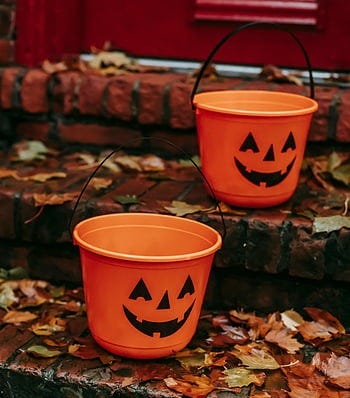
These lessons start early, and Halloween is a perfect example.
Kids get excited about candy, which is a pretty unremarkable thing for kids to be excited about, when you think about it. As adults, we’re so anxious about sugar that we can wind up turning that enthusiasm into a lesson about being “good.” Suddenly, what feels like a conversation about managing candy ends up being a lesson on how to feel about their wants, needs, and moral worth.
This week on the pod, I spoke with Vanessa Scaringi, PhD and Kathryn Garland, LCSW, CEDS about insecure attachment and our desire for connection and belonging. Because for many of us, being “good” is wrapped up in the hope that if we do everything correctly, we’ll be loved, accepted, and safe. When wanting candy becomes something to feel ashamed of, or resisting it earns praise, food can become one more place where we learn that approval depends on how well we control ourselves.
We’re allowed to enjoy things just because we enjoy them.
And I guess that’s where I get all worked up about the Halloween thing. As I’ve said before when I wrote about the research on “sugar addiction,” embracing pleasure doesn’t mean every boundary around food is inherently restrictive or harmful. But it’s important to know that we’re teaching kids (and adults!) so much more than nutrition when we talk about food.
Something as ordinary and human as enjoying candy shouldn’t need to become an exercise in restraint. Let alone a measure of goodness or a test of making the right choices. The delight of eating some Reese’s honestly deserves to be enough on its own.
So, whether you’re doing some trick-or-treating, handing out candy, or just enjoying a typical weekend, pleeeease don’t forget that pleasure is a nourishing act all on its own.
And for the love of spookiness, you do not need to repent or compensate for eating candy.
Happy Halloween, my friends!
PS: I’m that person who loves candy corn. Specifically the pumpkins. Speaking of pumpkins, I feel pretty strongly that they are also the best shape of Reese’s peanut butter cups.
The line I'm still sitting with is "you do not need to repent or compensate for eating candy." I read the "sugar addiction" research discourse that circulates through pharmacy circles, and what rarely gets said is what you name here: the moral accounting, where candy needs a protein-packed meal afterward to be forgiven. Kids notice that arithmetic instantly — it stops being about nutrition and starts being about worth. The delight of a Reese's pumpkin deserving to be enough on its own might be my favorite sentence of the week. Has anything you've written on this ever moved the needle with a reader in October, or is it the same debate every year?
Thank you for this, Abbie! So much of what you say on your podcast and here goes deep. Grew up in disordered eating and mom of a kiddo with eating disorder. Know what we're doing? Eating Halloween candy with joy. Took a long time to get here. This article is a gem. Same as first commenter ... on sitting with your line around not needing to repent or compensate. YES.
Also a candy corn lover. This year, fond of the Almond Joy. But all-time fave is Mounds. And anything with peanut butter (I love the Reese's bats).