
Some Ultra-Processed Thoughts...
Are UPFs really "addictive"? Do they cause chronic disease? Plus: San Francisco's lawsuit against Big Food, what actually shapes health outcomes, and why we need to blame systems—not snacks.

If you’ve been scrolling lately, you might have seen the news: San Francisco filed a major lawsuit against ten of the biggest food manufacturers in the U.S., including Coca-Cola, Nestlé, Kraft, PepsiCo, and Mars. The city is arguing that these companies have created a public health crisis by aggressively marketing ultra-processed foods (UPFs), especially to kids. The lawsuit says these foods are linked to Type 2 diabetes, fatty liver disease, heart disease, colorectal cancer, and even depression, and it seeks financial penalties, limits on “deceptive marketing,” and consumer education about health risks.
The headlines are designed to feel urgent—“Big Food is harming us!”—and it’s easy to feel panic or guilt, especially if you’ve ever struggled with body image, disordered eating, or food shame.
So let’s pause and unpack this carefully, because a few things feel important to tease apart.
I’m choosing not to paywall this rest of this piece — this conversation feels too important, too timely, and too intertwined with the lived realities of so many in this community.
But the truth is: paid subscribers are what make all of this possible. It’s literally just me over here (no team!), writing, podcasting, and researching.
If this space offers you clarity, comfort, or a little relief in a noisy nutrition world, I’d be so grateful if you’d consider upgrading to a paid subscription. Your support keeps this work sustainable — and I can’t tell you how much that means to me.
Definitions of ultra-processed foods are inconsistent.
The NOVA classification—the most common UPF system—was never designed to determine healthfulness. It groups foods by their industrial processes, not by their nutrient profile or lived accessibility.
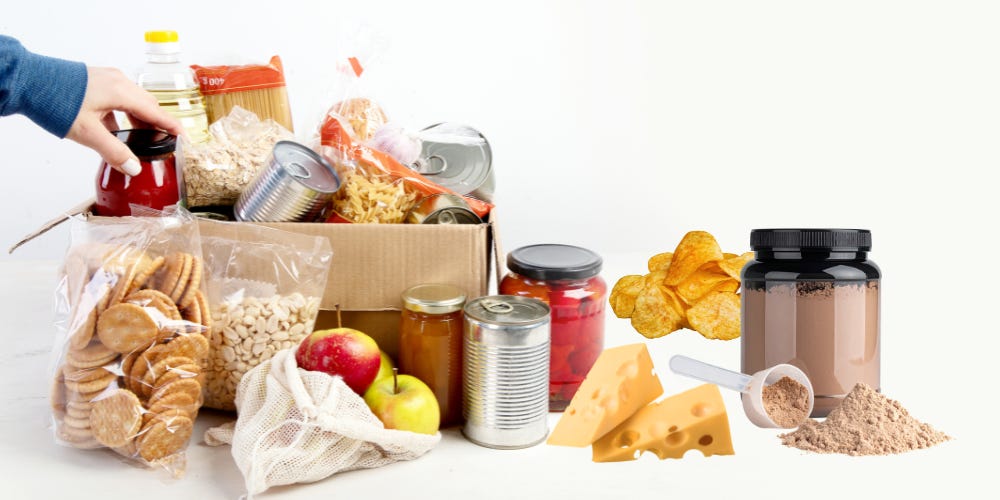
In fact, there is no universally agreed-upon definition for what counts as “ultra-processed.” Different studies, countries, and organizations classify foods differently. Candy and soda are usually what these articles choose for their images, but other foods—like your favorite influencer’s “clean” protein powder or their “whole food” Erewhon smoothie—fall into UPFs, too.
This lack of clarity makes sweeping claims problematic and can contribute to moralizing food choices in ways that are unfair, unhelpful, and often downright stigmatizing.
Calling certain foods “addictive” is misleading.
The lawsuit leans hard on the idea that UPFs are engineered to stimulate cravings, but the evidence for “food addiction” is incredibly weak. Unlike addictive substances, food is necessary for survival — and there is no single “addictive” agent in food.
Most “food addiction” research actually measures behaviors like feeling out of control around food, not biological addiction. And those feelings are strongly predicted by restriction, dieting, food insecurity, trauma, and chronic stress — the very conditions that make people rely on UPFs in the first place.
Neuroscience also shows that scarcity increases reward response. When people are underfed or stressed, any food feels more urgent and compelling. That’s physiology, not addiction.
Labeling foods as “addictive” pathologizes people’s coping in an unequal system, reinforces anti-fat bias, and often makes eating more chaotic by increasing shame and restriction.
Listen to one of my older episodes that breaks down the research behind this right here.
Research linking UPFs to disease is not causal — it’s correlational.
It can show patterns—higher UPF intake alongside higher rates of certain illnesses—but it cannot prove that UPFs directly cause disease. Correlation is not causation.
In other words, just because two things happen together doesn’t mean one causes the other.
Think about it like this: one of the first examples of this I learned in graduate school was on the link between shark attacks and ice cream sales. Both increase in the summer. But does eating ice cream put you at risk of a shark attack? Of course not. Warmer weather drives more beachgoers (and ice cream consumption) and more shark exposure. Similarly, seeing higher disease rates among people who eat more UPFs doesn’t automatically mean the foods themselves are causing illness. Other factors — stress, income, housing, access to healthcare, systemic inequities — play a huge role.
And the research supports this.1 When UPF studies account for the social determinants of health—such as income, housing, stress, racism, food access, and healthcare access—the correlations often weaken or disappear altogether.
UPFs aren’t the same as tobacco, opioids, or lead paint.
A thoughtful member of my group community shared some concern over an article that was comparing this UPF lawsuit to other industries that California has taken on in the past.
Yes, it’s tempting to draw parallels—Big Food vs. Big Tobacco, opioids, or lead paint—but it’s really not the same conversation. Those industries sold products that caused direct, causal physiological harm — carcinogens, addictive drugs, environmental toxins. Ultra-processed foods are different. Their associations with disease are correlational, not causal, and heavily confounded by inequity.
So while it feels intuitive to compare ‘Big Food’ to other harmful industries, applying the same legal lens risks flattening a far more complex picture.
UPFs are often the most accessible and reliable calories that someone has.
UPFs are everywhere and often less expensive (unless of course we’re talking about the other UPFs that aren’t being highlighted in this case, because…wealthy people eat them?). For many communities, these foods are the most accessible, affordable, and reliable sources of calories. They also represent safety and stability for people with eating disorders, neurodivergence, disabilities, illness, and so much more.
Targeting these foods without addressing broader inequities risks harming low-income communities and turning a structural problem into an individual one (“people eat the wrong foods”).
Blaming “ultra-processed food” often becomes a proxy for blaming fat people.
This lawsuit may talk about “diet-related chronic disease,” but the public conversation quickly collapses that into body size. Research shows weight stigma itself increases inflammation, cortisol, and cardiovascular risk—independent of BMI. And public health campaigns that moralize food disproportionately harm people in larger bodies, who already face barriers in medical care and employment. (This is, again, one of the very factors that can drive both higher stress and higher reliance on inexpensive foods.)
What actually predicts chronic disease?
UPFs may show correlations, but the strongest predictors of chronic disease are:
Income and financial stability
Housing security
Chronic stress
Weight stigma
Environmental stressors
Racism
Discrimination
Access to healthcare
Food security
These structural and social factors explain why some communities rely more on inexpensive, shelf-stable foods—and why correlations with disease show up, especially those named in this lawsuit. But it’s easier—politically, emotionally, rhetorically—to blame a granola bar.
The real harm is structural, not in the food itself.
If there’s a villain here, it’s not the Pop-Tart. It’s the system that decides who has choices, who has abundance, and who is left navigating hunger, stress, and scarcity.
The impact on public health absolutely matters, but the harm lives in corporate practices, not in the existence of a Dorito. Think:
Price manipulation
Consolidation of power
Limited access to fresh foods in some communities
Labor exploitation
Profiting from inequality and scarcity
Those are structural harms, not biological harms of specific foods. When policy approaches only focus on “healthy eating” or “individual responsibility,” we risk missing the root structural causes of poor health.
Instead, what’s needed are equitable social conditions: stable housing, food security, income, robust social support, access to affordable healthcare, and reduction of systemic stress. In other words, we need to confront the unequal systems that determine what food is available, accessible, and possible — not villainize certain foods and the people doing their best within those systems.
What this means for us:
Headlines about UPFs do not make your food choices the problem.
You don’t need to panic about chips, candy, or cereal.
If you have a history of dieting or disordered eating, it makes sense if headlines like these feel triggering. Remember, restriction is not the path to health.
Corporate accountability is important, but the focus should be on systemic inequities, not individual foods or bodies.
Awareness of these structural factors allows us to hold corporations responsible while maintaining compassion for ourselves and others.
Before we blame UPFs for everything under the sun, we have to remember that they offer something deeply human: reliability. Especially for those whose bodies, brains, or circumstances make eating anything else feel overwhelming.
We can examine the influence of large food companies without shame, guilt, or fear. All of us deserve dignity, autonomy, and access when it comes to food—and that isn’t negotiable.
What still needs to be better understood?
The difference between structural harm and nutritional harm
How UPF research is confounded by inequity
The weak evidence for “addiction” framing
How moralizing foods worsens eating disorders and stigma
How public health narratives disproportionately target fat people
And importantly: how lawsuits like this can unintentionally fuel shame, surveillance, and restriction
If this piece stirred something in you—a thought, a question, a quiet hmm—I’d love to hear it. The comments are where our collective wisdom lives, and your voice genuinely shapes this space.
To make this newsletter and the podcast possible (and access deeper conversations), consider becoming a paid subscriber. It helps me keep this work free, weight-inclusive, and rooted in justice.
Beyond a paid subscription, you can also help by hitting the “like” button, restacking, or sharing this with someone who’s exhausted by all the food fear-mongering.
Related episodes and newsletters:


Relevant studies on UPFs, social determinants, and health outcomes:
I have to chuckle when I think about the fact that for me consuming (almost) exclusively UPF means I am eating “healthier” than ever and “healthier” than many Americans. With (then undiagnosed) ARFID I just kind of ate whatever I could manage regardless of nutrient content. I often lacked protein in my meals greatly. Then I about quit eating and started working with an amazing RD. Now almost exclusively drinking Boost Very High Calorie, I’m finally getting the nutrients my body needs. And when I do eat solid foods, the predictability of UPF is very helpful!
Thanks for this post. I’d like to hear more about “They also represent safety and stability for people with eating disorders, neurodivergence, disabilities, illness, and so much more.” I’m recovering from an ED and rely heavily on processed because I can’t seem to muster the energy to cook. Is this an example of
what you were talking about?