

“An acorn does not have to say, ‘I intend to become an oak tree.’”
― Sonya Renee Taylor, The Body Is Not an Apology
My little sister got married last weekend. She married her soulmate, and it was the most beautiful, joyful, celebratory lesbian bash — something out of a dream. We danced down the aisle to Chappell Roan’s Pink Pony Club, the dance floor opened with Katy Perry’s I Kissed A Girl, and the dinner was wood-fired pizzas followed by a variety of mouth-watering cupcakes. Perfection doesn’t do it justice — I truly have no notes.
I left with my faith in humanity not restored, exactly, because it was never truly lost, but reminded. Reminded of what becomes possible when you build a world around yourself that actually supports who you are. Reminded that belonging — real belonging — is something you construct. It doesn't come pre-made from the culture. Because the culture, frankly, is not in the business of offering it.
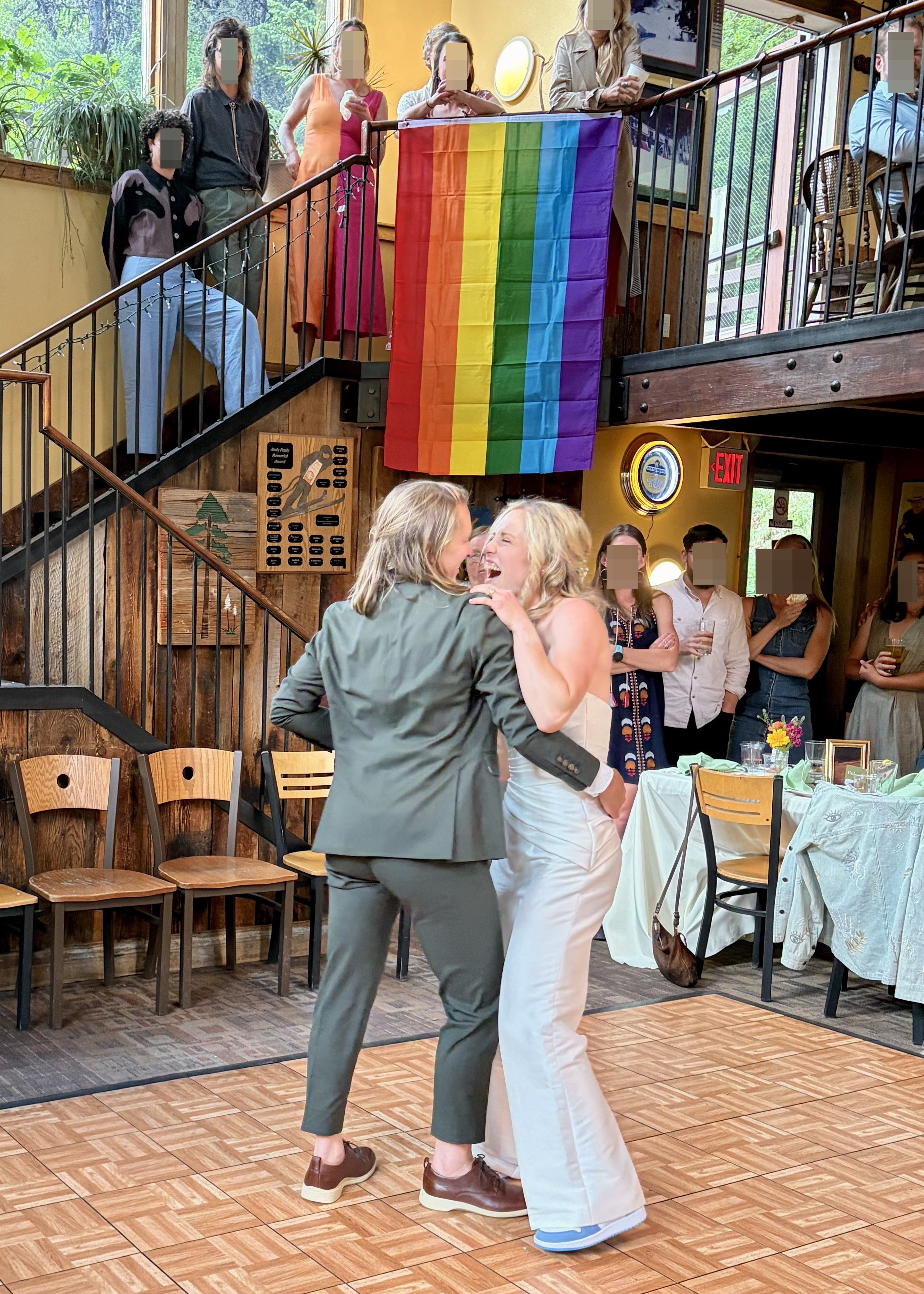
Watching Emily and Evie be so completely, unapologetically celebrated for exactly who they are — I kept thinking: this is what we give up when we spend our lives trying to fit in. Not just the joy of it, but the depth of it. The specific, irreplaceable beauty of being known and loved without condition.
I think about conformity a lot in my work. The pressure to assimilate — to be thinner, younger-looking, smoother, smaller — isn't just a personal struggle. It's structural, it's deliberate, and it's accelerating. GLP-1 medications, AI beauty filters, the democratization of cosmetic procedures, the wellness industrial complex repackaging insecurity as self-care — all of it is funneling us toward an increasingly narrow and homogenous idea of what a body should look like, how a face should age, and what counts as beautiful. A standard invented by the people who profit from its eternal pursuit gets repeated everywhere and endlessly, until it starts to feel like reality.
Conformity offers something real, and I want to be very clear about that. It offers a sense of safety because it offers legibility and a kind of ease. Because when you look the part, when you play along, the world tends to leave you alone. There is genuine relief in that, and there is real grief in giving it up. When you stop pursuing the thin ideal or the anti-aging ideal or the beauty ideal, you can lose things. You can lose relationships. You can lose the comfort of moving through the world unchallenged.
That loss deserves to be named, discussed, and grieved. I’m never going to say it doesn’t cost anything, especially as someone with so many unearned privileges. The further you exist from the dominant ideal — in your body size, your gender, your age, your sexuality, your ability — the higher the cost of refusal, and the more the culture works to make nonconformity feel impossible.
But day after day, the question I keep coming back to is: what does fitting in actually require of us?
There’s an image I can’t get out of my head. You know that saying “a square peg in a round hole”? The only way to make that work is to make the square peg smaller. You sand down its edges. You shrink it until it’s small enough to slide through without catching — small enough to disappear into a shape that was never its own.
That’s what conformity costs. Not just the size of your body, but the size of your life.
It costs your edges and your voice. It costs your truth and your values. It costs whatever version of yourself makes other people slightly uncomfortable — which, often, is exactly the version of yourself that is most alive.
Savala Nolan writes beautifully about living in the margins in her book Good Woman, and I highly recommend reading it.
The culture wants us small and same and legible because we are easier to manage that way. We are easier to sell to, easier to dismiss, and easier to keep in line. Our compliance is the product.
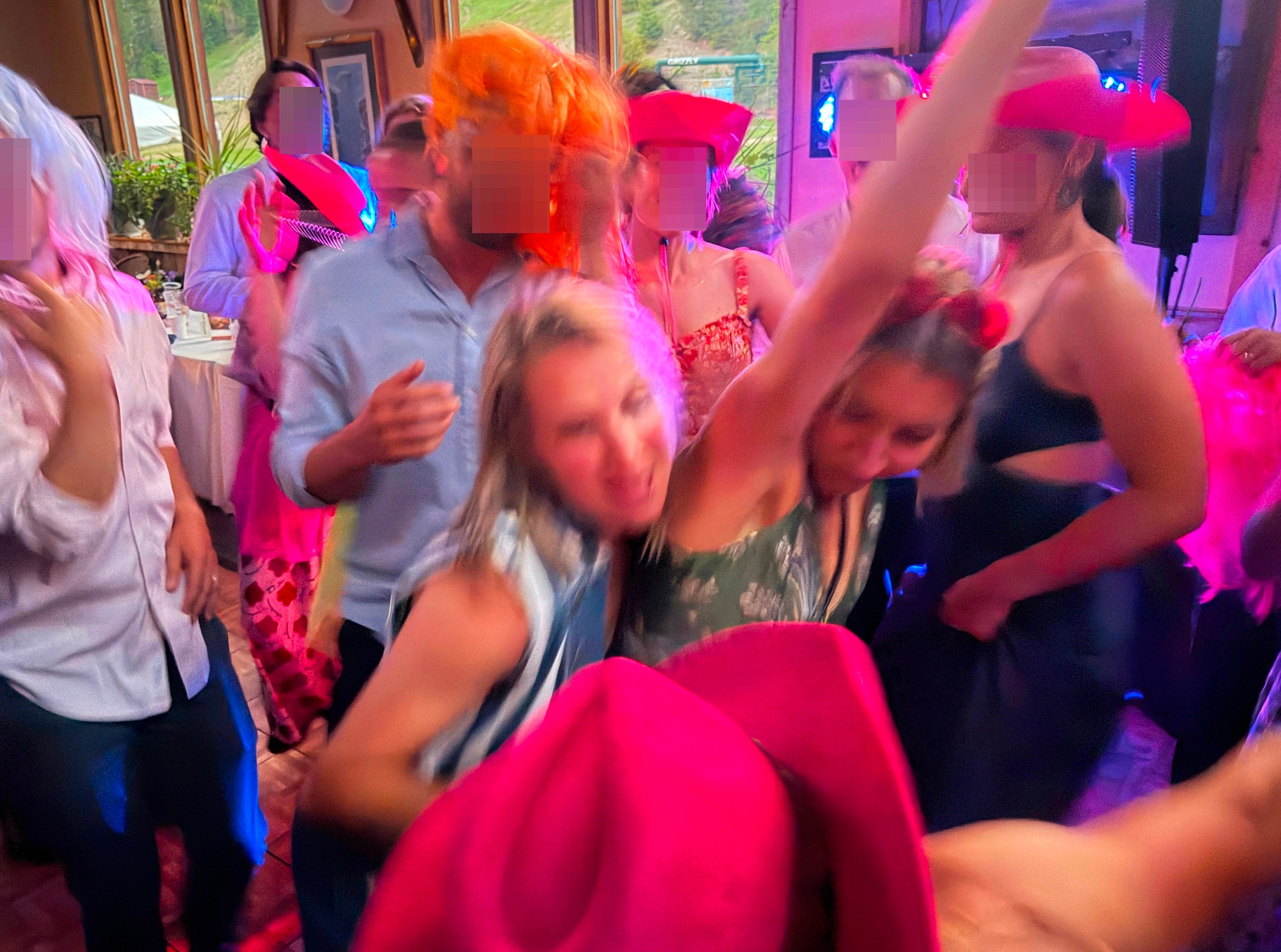
I just spent a weekend watching two women refuse all of that in the most joyful, full-throated way imaginable, and it was stunning. Not because it was easy — it wasn’t and it isn’t and we all know that — but because of what was on the other side. The community they built and the love they called in. The celebration that erupted when they walked into a room full of people who had chosen to show up for exactly who they are.
That's not fitting in, that's belonging. And they are not the same thing.
Fitting in is contingent, and it depends on your ability to keep shrinking, keep adjusting, keep sanding yourself down to match the shape of the hole. But belonging is built. It requires you to be the shape you actually are and then find — or create — the people who can hold that.
My sister and Evie did that. They built that world. And being inside it is a master class in what we are actually working toward when we do this hard, countercultural, ongoing work of divesting from diet culture and the pursuit of the thin ideal and the beauty standard that was never made for any of us.
We’re not just trying to make peace with our bodies. We’re trying to build a life we can actually live in.
And it’s so much more interesting out here. It really is. Conformity is boring. The culture wants you to believe that being different is the tragedy, but there is nothing more tedious than the relentless sameness of fitting in. The specific, gorgeous, irreducible thing that you are doesn’t fit in any pre-made hole. It never was going to.

I truly think about belonging versus conforming every day. Every client session, every time I write. Because I think it’s at the heart of so much struggle — a desire to feel safe and accepted, and what we’re forced to sacrifice for that. It’s a very human desire, we’re just sold the wrong “solution” to it.
The antidote to the temptation of conformity is community. It's building a world so full of real belonging that the one the culture is selling starts to look as hollow as it actually is.
I’d love to know where you are still feeling the pull of conformity.
And — what helps you reclaim belonging over fitting in? How do you know when a place, a person, a set of values is true safety, rather than just conformity?
Thank you, as always, for being here. This space feels like belonging — to me.

I have been being treated for cancer for three years, with one of the side effects being an intractable 50lb weight gain and another pretty limiting neuropathy in my legs making balance and walking difficult, an abdominal separation which will need surgical repair is in the works and I know from prior surgeries, the surgery recovery was easier before the weight gain. I am taking a GLP1 med and its the first time I have been able to move freely, be less off balance and fit in some of my clothing in three years. Getting in and out of my car, getting in and out of bed, the shower, pools all these things have become a trial with all of this, so there is a place for these meds. Prior to that, I excercised and did acupunture to try to gain this freedom of movement and it did not help in any real way except to keep a little bit limber. I feel myself coming back, not to my “old” body, that is gone. But to my old way of life, small freedoms that make life easier. I am not trying to be a cover girl or “age well” I am trying to enjoy what life I have left. These medications are helping physically and there are people like me out here who are benefitting from them. If I had any other physical or mental issue barring my mobility, medication would be ordered so the stigma of the meds feels unwarranted to me. I am not trying to shrink or be like anyone, just have some better quality of life through easier mobilty which I found to be gained through some weight loss. Your sister looks so happy and I am elated for anyone who finds that kind of love.
Loving this so very much. Thank you. ❤️💃🏿❤️